All Work

Savage X Fenty

Setting UX direction and driving measurable conversion gains during a major platform transition

Summary

Brought in during a major CMS transition, I helped bring clarity and direction to product and design at a point where delivery was already in motion but UX priorities were unclear.

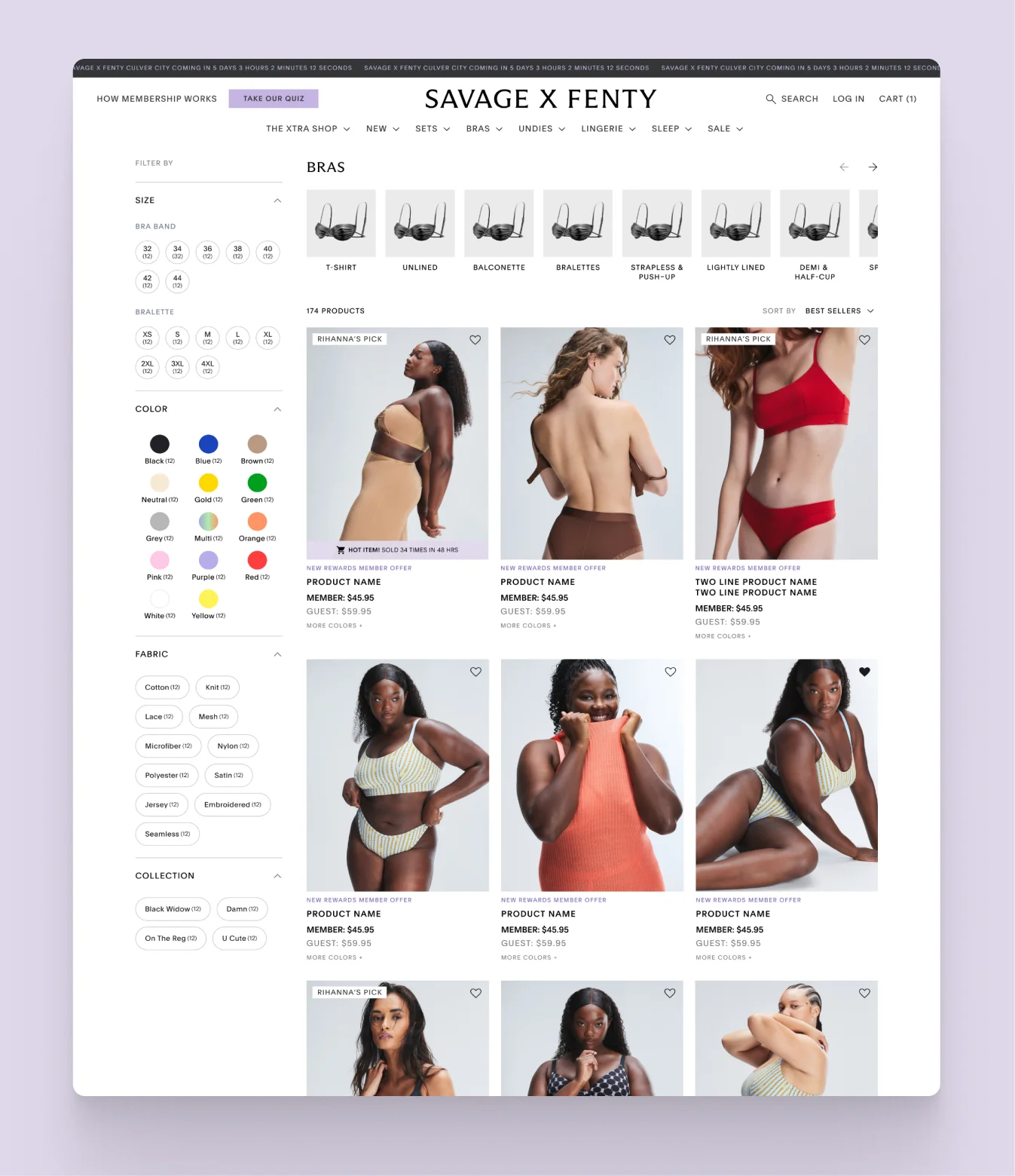
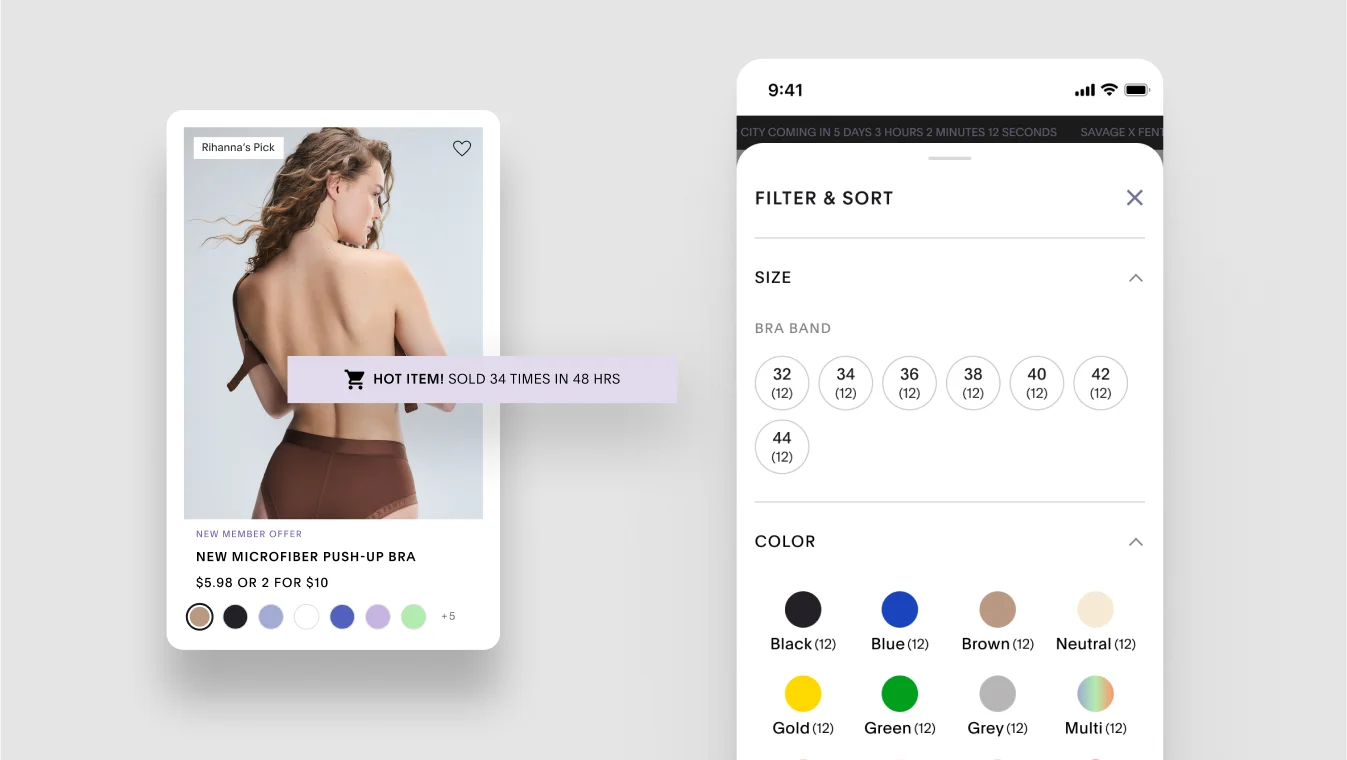
This work informed the 2024 roadmap and drove measurable improvements across key journeys, including a +2.8% increase in checkout conversion, a 10% reduction in order completion time for returning customers, and a 12.8% increase in product list views.

Context & Challenge

Improving conversion while the platform was already in transition

Savage X Fenty is a digitally native DTC brand entering a period of change, with a major CMS migration underway to support new acquisition strategies and future growth. Engineering focus was centred on enabling this transition and empowering global marketing teams. From a UX and product design perspective, there was no clear starting point. Product and design teams lacked a prioritised roadmap for improving the existing customer experience, and access to sensitive performance data was limited. Without clarity, there was a risk of reactive delivery and misdirected effort. The challenge was to create focus quickly — identifying where UX improvements would have the greatest impact on conversion and customer experience, without slowing the wider platform work already in motion.

Whitespectre’s design expertise enabled them to quickly identify key UX/UI opportunities for improvement in our digital experience, and deliver a strategic roadmap that balanced performance optimization with Savage X Fenty’s new elevated look and feel. By implementing Whitespectre’s recommendations, we enhanced the customer journey, streamlined the path to purchase, and successfully brought our refreshed brand vision to life—ultimately delivering a measurable impact on engagement, conversion and our brand presence.”

Vaughn Harber
Vaughn HarberVP of Product Management, Savage X Fenty
UX audit
Key Decision (1/3)

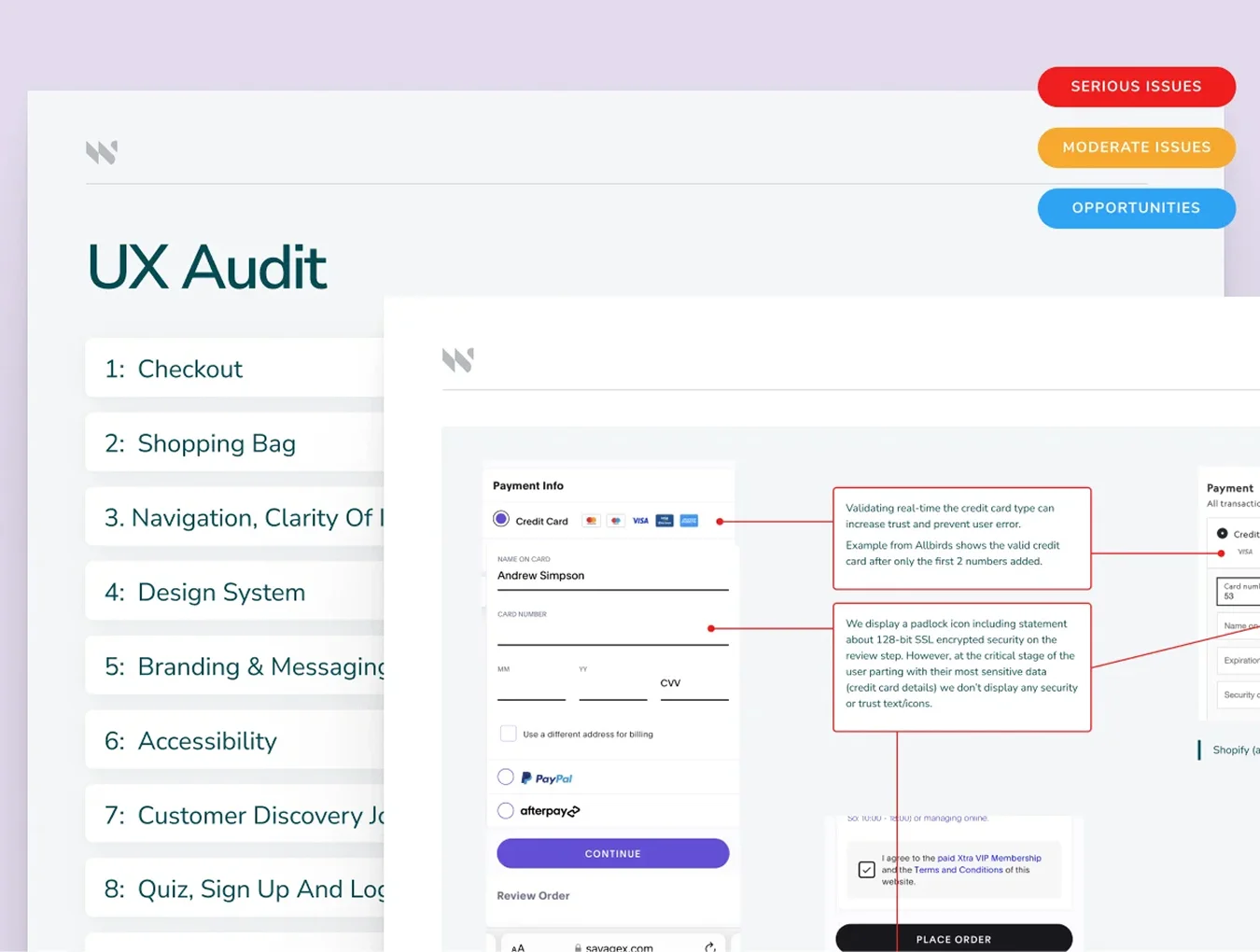
Create clarity fast through a focused UX audit

With delivery already in motion and engineering focused on the CMS transition, product and design lacked a clear, prioritised starting point. Rather than moving straight into execution, I chose to create clarity first — aligning teams around where experience improvements would have the greatest impact. The resulting audit established a shared understanding across stakeholders and set a defensible foundation for decision-making. Despite the client having recently commissioned a more extensive third-party audit, this work was adopted as the primary reference and went on to shape Savage X Fenty's 2024 UX roadmap.
Key Decision (2/3)

Lead checkout improvements to remove friction at the point of conversion
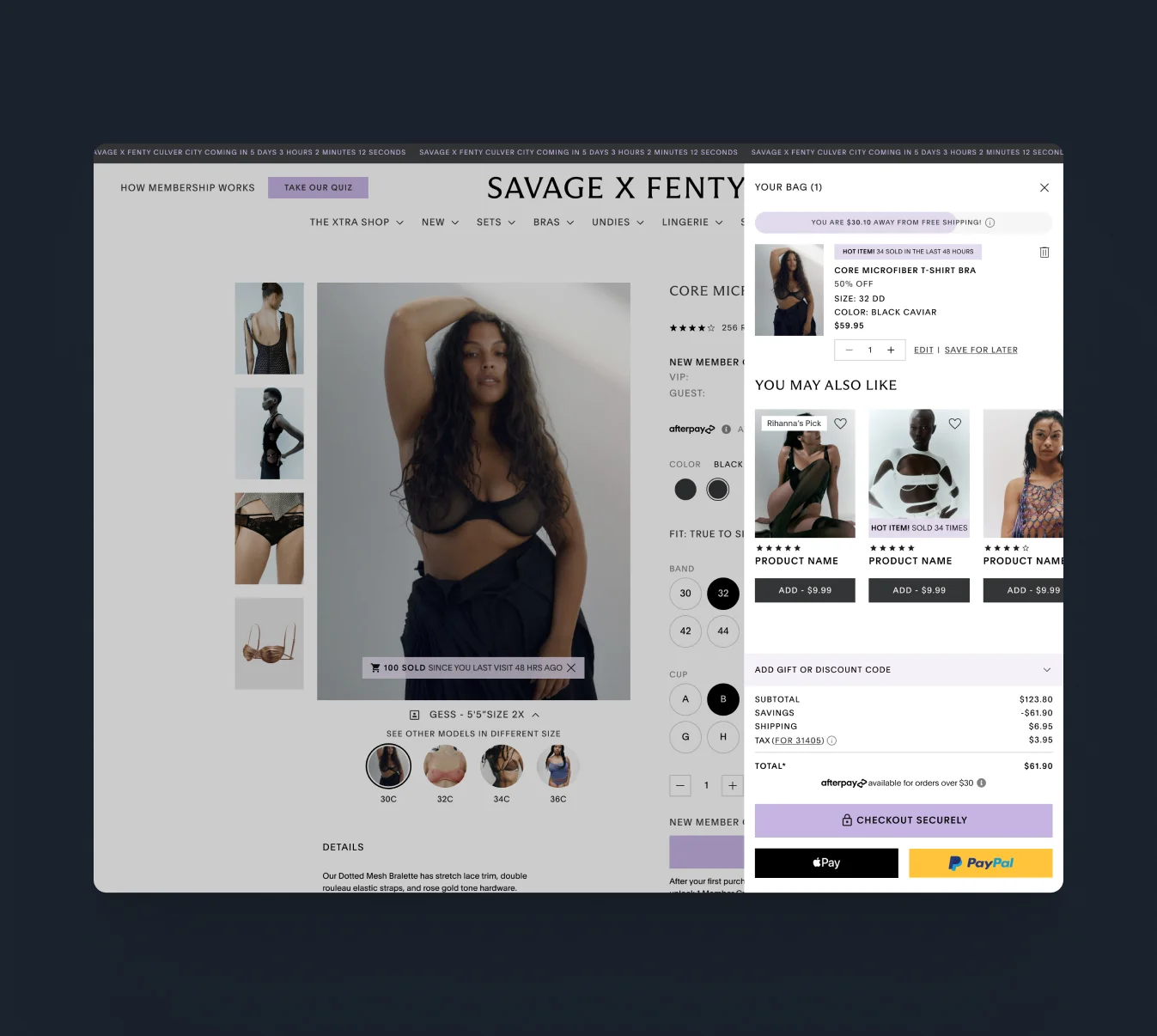
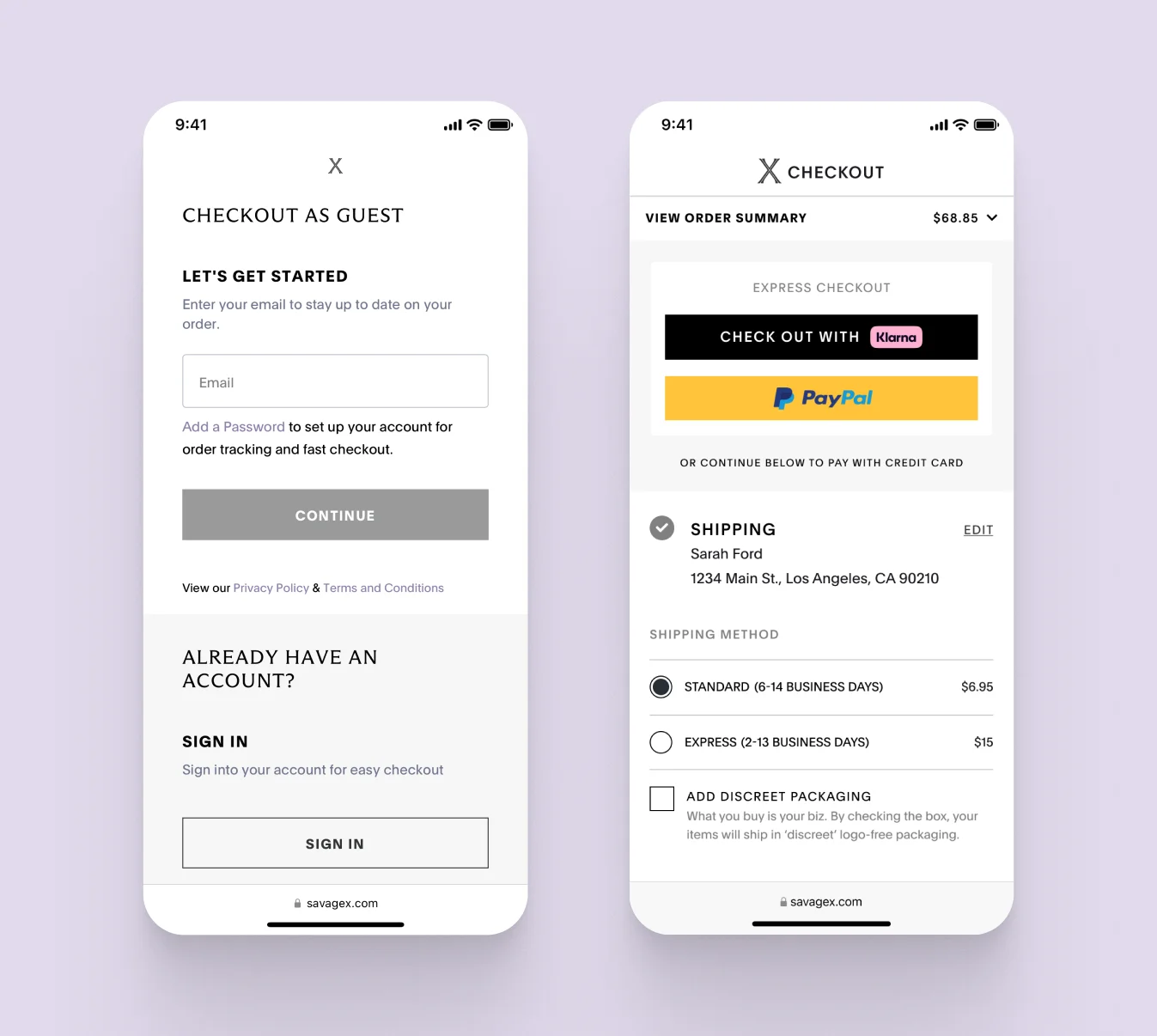
The existing checkout had a structural problem at its core. A slide-out mini cart appeared when users added items to their bag — but it showed almost none of the information a customer needs to commit: no line item prices, no order total, no shipping cost, no discount codes. Because it answered so few questions, users had to navigate through to the full cart page anyway, making the mini cart effectively redundant. Worse, between the mini cart and the full cart sat a forced sign-in prompt — at exactly the moment when the user still didn't know what they'd be paying. The sequence was asking people to commit before giving them any reason to. That's where abandonment was happening. The redesign addressed this in three ways. First, we replaced the mini cart with a fully functioning drawer cart — all the information needed to make a decision, immediately visible, without leaving the page. Second, we moved the sign-in step to after the user had initiated checkout, and introduced guest checkout for those not ready to create an account. Third, for returning customers with saved addresses and payment methods, we eliminated the redundant shipping and payment entry steps entirely — taking them straight to review and place order. The product finally remembered who they were. These weren't cosmetic changes. Each one removed a specific reason to stop.
Checkout redesignCart drawer
Full page view
Checkout detail
Key Decision (3/3)

Remove the bottleneck — don't accept it as overhead
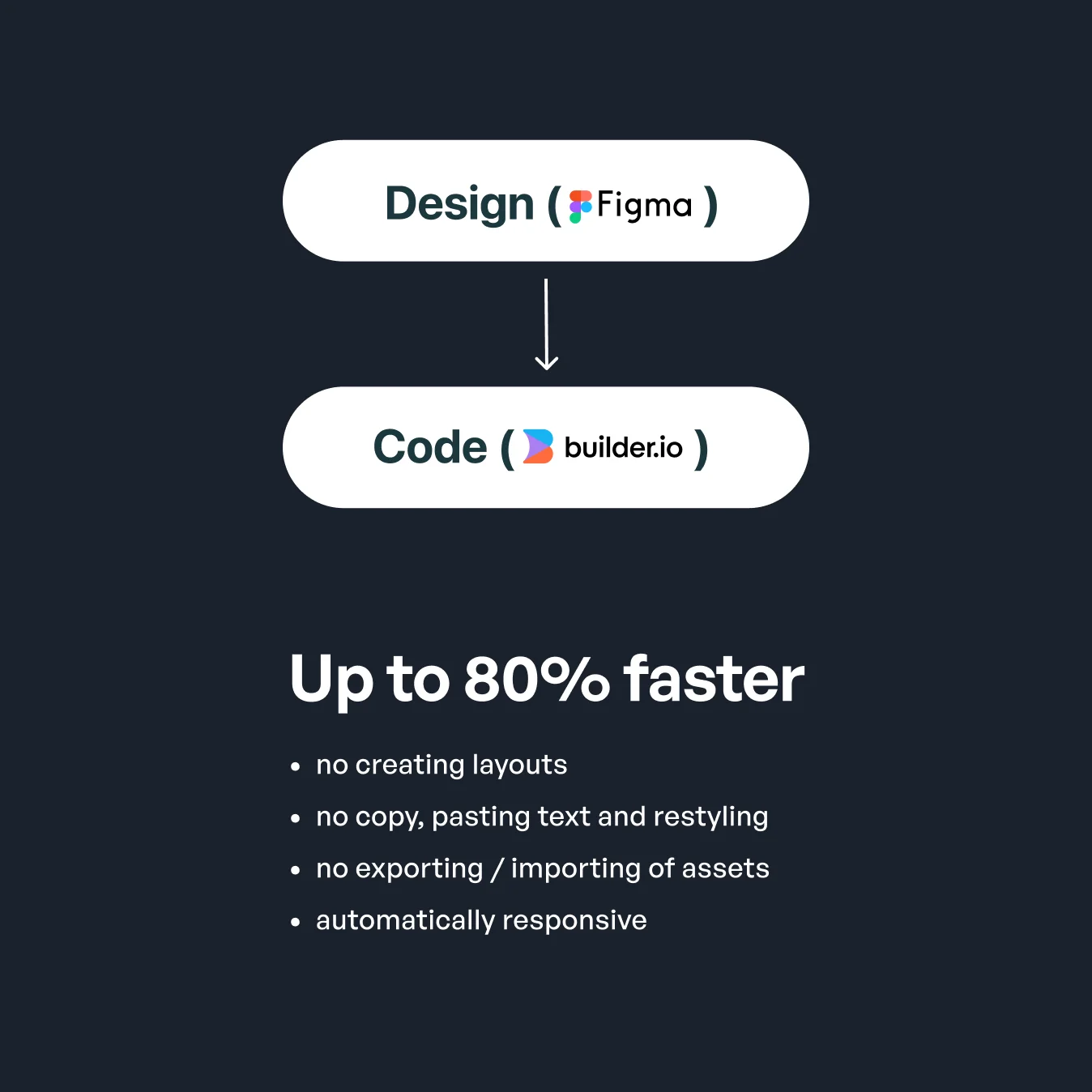
Rather than accept an 80% rebuild overhead as a team constraint, I looked for a way to remove it entirely. By testing and introducing a Figma-to-Builder.io workflow, we were able to generate responsive pages directly from existing designs. This reduced rebuild effort by approximately 80%, accelerated delivery, and allowed engineering and product teams to focus on higher-value work during the transition.
Figma to Builder.io workflowBuilder.io output
Outcomes & Impact

Clear direction, measurable gains, and confidence to move faster

+12.8%Increase in product list views, through enhanced navigation
+2.8%New checkout overall conversion rate growth
10%Reduction in order completion time
While the most visible results came through improved conversion and efficiency across key journeys, the broader impact was the clarity this work created for product and design teams during a period of transition. By focusing effort on the highest-impact experience changes, Savage X Fenty were able to improve performance at critical moments in the customer journey while establishing a clear foundation for continued optimisation. Internally, this work increased confidence in UX-led decision making, aligned teams around shared priorities, and provided a scalable framework to build on as the platform and CMS continued to evolve.
Other Case Studies